Tuesday, February 14, 2012

Sonnet 1979 to Joanne


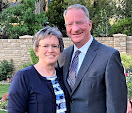
We had a wonderful Family Home Evening with all of the senior missionaries. Joanne and I were in charge of the event. We had each of the husbands write a poem to their wives. They submitted the poem and a photo of their spouse. I then put it in a PowerPoint presentation last night. It was a great hit. This is poem I wrote for Joanne and the photo I submitted.


Sonnet 1979
 to Joanne* 
From your husband, Darrel L. Hammon

 Shall I compare thee to a spring day?
Thou art more consistent and more giving:
Wyoming winds do beat the trees through May,
And spring’s sun fades far too early in the evening:
Often most kind thine eyes find mine
And frequent is thy quick smile spread;
And each kiss from cheek to ear truly a sign,
From heaven or temple’s constant course determin’d;
But thy eternal beauty shall not fade
Nor lose possession of my heart thou ownest;
Nor shall vicious torments tear me from thy side,
When in eternity together with me thou be’th:
So long as we can obey or hearts can agree,
So grateful to God for sending thee to me.

 *Imitation: Shakespeare’s “Sonnet 18”)

Sunday, February 12, 2012

Tips for making empty-nesters years meaningful


Enjoy!

"Tips for making empty-nesters years meaningful"
Elder Darrel L. Hammon

For those who are empty-nesters or those who are feeling the beginning symptoms, my wife and I understand your pain, suffering, loneliness and other feelings. Both of our daughters have now moved out.

For most of us, having children ultimately leave the nest is a challenge — one that we definitely do not look forward to but know it is forthcoming. Although powerful, these feelings can be overcome or at least put in some perspective.

We don’t proclaim to be completely cured of the “empty-nest syndrome,” but we do need to prepare for it.

Remember that empty-nesting is part of life
No matter what anyone tells you, the empty-nest syndrome is just a part of life. Children are born, grow up and leave home. While it may not be that cut and dried, this is the sequence. Once you understand empty nesting is real, begin doing things to prepare or help you overcome these potential feelings.

Establish traditions with your children
Perhaps, this is one of the most important aspects of parenting. Children need good traditions on which to fall back on. What we have discovered is the traditions we started with our family have now become their traditions. While we want them to begin their own traditions, there is nothing wrong with them hanging on to certain traditions that are wholesome and family honored. Tradition sharing connects you forever.

Do things together with your children
No matter what they say, children do enjoy doing things with you. They want to spend time with us. Ironically, the times they remember most are usually the small things.

Teach your children gospel principles
In The Church of Jesus Christ of Latter-day Saints, teaching your children about Heavenly Father and Jesus Christ is paramount to an eternal family. Thus, time reading the scriptures and studying the gospel together became a staple in their daily diet along with attendance at Sunday meetings and their Young Women program. Consequently, both daughters married Mormon returned missionaries, who are both Eagle Scouts, in the temple of the Lord, and they are raising their families the same way they were raised.

Think of empty-nesting as a new start
One way to think about empty nesting is that it can be an opportunity for a new start for you. During our children’s growing-up years, we all spend an inordinate amount of time with them. Sometimes, we fail to remember that we need time for ourselves. Granted, our first responsibility is our families. When they are gone, think of this time as starting over or beginning something you have wanted to do. Make goals and go out and accomplish them.

Begin preparing now for empty-nesting
If your children haven’t left yet but are on the cusp of leaving, begin preparing now. The challenge usually lies with unpreparedness on our parts. Sometimes we think that it will be a lifetime before our children leave, but the lifetime often barrages us before we know what hit us. If we set annual goals to accomplish, including what we will do after the children leave the nest, we will be a lot better off. We need to invest in ourselves for that day.

Resurrect something old and learn something new
Often, our identity and skills become subservient to the identities and skills of our children. But learning should never end. When the children leave, you will probably have time on your hands. You may have to resurrect an old hobby or skill or learn a new one. Today, you can learn so many new things at your local community college or even online.

Continue to date
We are firm believers in continuing the dating process. We have been counseled that dating must not end after marriage. Rather, we should date each week. When I was a college president, my schedule was extremely busy. We decided that we would have lunch every Thursday. We enjoyed our times together, whether it was a quick burger or lunch at our favorite Mexican or Chinese restaurant. The place was not important, but spending time together was.

Keep in contact
Once children leave the nest, there is a tendency to believe you will never have contact with them ever again. We have discovered the girls still want and need contact. They love to call their mother and just chat about cooking, recipes or whatever. Now, with one grandchild, we try to Google chat once a week so we can establish a relationship with our granddaughter. With technology, it has never been so easy to communicate.

Seek opportunities to serve
One way to eliminate some of these feelings is to serve others. In your community, there are innumerable ways to serve. If you belong to a church, talk to your pastor or bishop about other ways to serve. There are just so many ways to extend ourselves.

Keep smiling
A sense of humor is a key to blocking the empty-nest feelings from taking over. One of the biggest challenges that we will ever face is when our children leave home, but knowing you taught them well and remembering all the fun times with them should bring a smile to your face. Dory in "Finding Nemo" nonchalantly counseled us, “Just keep swimming. Just keep swimming.” So, following Dory’s example, we should say to ourselves, “Just keep smiling. Just keep smiling.”

So, whether you are currently empty-nesters or are facing that situation in the near future, remember there are ways to prepare and keep yourself rolling ever forward.

Sunday, January 29, 2012

The Johnsons come to visit


"The Johnsons Come to Visit" 
By Elder Darrel L. Hammon


One of the great things about being senior missionaries is that your children can come visit and you can go to the beach with them. And that's exactly what we did when Anna Rose, Christiaan, and Emiline came to visit in January. We had a great time and visited a few spots along the way. 

Dedication Site--Elder Ballard in 1978
Elder Ballard's Dedication Memorial--In 1978, Elder M. Russell Ballard came to the Dominican Republic and dedicated it for the preaching of the gospel. Since then, many Dominicans have joined the church. Currently, there are 18 stakes, several districts and a beautiful temple in the Dominican Republic. The dedication site is in a park along the street called Mirador, a beautiful place that overlooks Santo Domingo.

Emline by a really old cannon
El Conde--El Conde is in the Colonial Zone, a very historic site. It is where Santo Domingo originated in the early 1500s. Santo Domingo is the oldest city in the Americas. The Colonial Zone is an incredible array of historic buildings, including a home built for Diego Colon. Because we happened to go on a day classified as a holiday, many of the shops were closed; so, the Johnsons didn’t experience “El Conde” in all of its majesty. Thankfully, the traffic wasn’t as bad that day.


Tres Ojos--Tres Ojos is an underground series of little lakes that the Taino Indians, natives to the DR, participated in religious ceremonies. It is just beautiful inside with lots of rocks, hanging vines, and little lakes, which are also called cenotes. Tres Ojos is also famous because some parts of the Tarzan movies were filmed here.

Emiline at the beach in Juan Dolio
 Juan Dolio Beach--We spend two nights and three days at the Barceló, which is a wonderful hotel in Juan Dolio along one of the beautiful beaches in the Dominican Republic. We ate lots of good food, played on the beach, went snorkeling, swam in the pool, and just relaxed with our family. We ate mostly in the buffet restaurant, but we did eat in one of the restaurants onsite. Christiaan ordered fish and received quite a surprise.


 The Santo Domingo Temple--Anna Rose and Christiaan along with Hermana Hammon were able to attend a session. Ironically, they and two other couples were English-speakers so the session was done in English. But they had a wonderful experience in one of the more beautiful temples in the world. Elder Hammon (a.k.a. "Papa Hammon") stayed and played with Emiline, truly a enjoyable task.

Consuelo Branch


Consuelo Branch—Anna Rose’s favorite place we went while they were here was the Consuelo Branch, a little branch that we sometimes attend. Anna Rose played the piano/keyboard during Sacrament meeting. The children were fascinated with her playing. During Sunday School and Primary, all of the children were gathered around her while she taught them some of the rudiments of playing. Presidente Montero, the Branch President, thanked her then and later thanked us profusely for Anna Rose and her talent. They all wanted her to come back and be a part of the Branch. The sisters in Relief Society were fascinated with Emiline’s blonde hair. One of the sisters just stroked it the entire time during Relief Society. Her blonde, wispy hair is such a contrast to the thick, wiry black hair of most of the people here.

Emiline and her new friend at the Almacen
Bishops' Storehouse--Because we lived above the Bishops' Storehouse (a.k.a. "Almacén"), they were able to take a tour of the Almacén. While Anna Rose, Christiaan, and Hermana Hammon were in the temple, Elder Hammon and Emiline visited the Almacén where Emiline made a new little friend. Unfortunately, we had to leave, and the little girl began to cry. When Emiline and I were driving back to the temple, Emiline said, "Papa, we have to go find her." I tried to tell her I didn't know where she was, but Emiline wanted to go find this little girl. I wish we could have.

Overall, we had a wonderful time with them. It was so good to see them. It was especially fun to see Emiline and note how grown up she is becoming. We were amazed how huge her vocabulary and her speaking ability have become. We see and talk to her each week via Skype, but it is still amazing to have the “live Emiline” in front of us. We shared lots of hugs and kisses. She is definitely the sweetest.


Sunday, January 22, 2012

Foreign country, foreign language, foreign culture: Keeping your mission language current

The following article appeared online at http://www.deseretnews.com/article/705397245/Foreign-country-foreign-language-foreign-culture-Keeping-your-mission-language-current.htmlDeseretnews.com

 Foreign country, foreign language, foreign culture: Keeping your mission language current

Created By Elder Darrel L. Hammon 
One of the things that scares the daylights out of senior missionaries is opening the envelope from Salt Lake City that contains the line: “You are hereby called to the (fill-in-the-blank) mission." The gasps and awes burst forth until they realize they will either have to learn a new language or brush up on the one they learned many years ago in the field.

Elder Lynn Snow--RM from Chile
Elder Lynn Snow, who served in Chile in the 1960s when it was just one mission, said, “At first I was elated at the call, and then the reality spread over me like thick cream on strawberries. It reminded me of a cowboy poem: ‘Forgotten More than I Learnt.’ ”

Most missionaries who have to learn a foreign language learn it pretty well before boarding the plane home. While traveling, they vow they will keep it up, speak their language to their children, read all the scriptures at least once a year in their learned language and practice with anyone they can.

MTC missionaries
Unfortunately, when the plane lands, families maul them, matriculation at the university or work begins immediately, and a special young woman or young man appears in one of their classes. The promises of keeping sacred their language dissipates like snowmen on a warm spring day.

The challenge becomes, then, learning or relearning a language when called to serve.

The church’s Missionary Training Center is a good place to start. The MTC offers one-on-one tutoring for senior missionaries. Plus, senior missionaries receive "Grammar Explanations for Senior Missionaries." They also have another binder that has “tasks,” such as “grammar,” “welfare,” “proselytizing,” “temple” and “general tasks.” These tasks come with CDs that walk them through each task with a native speaker who teaches them how to use correct pronunciation.

Sister LeeAnn Call, who serves with her husband in Guatemala, took the course. She said that “language immersion is the most helpful because you can more easily put things in context. My adult brain is still a little slow in remembering all the new words that are thrust upon me. But I'm trying!”

Reading the Book of Mormon, the Liahona and other church publications in the foreign language aloud can be an excellent way to keep up the language and the accent. When the tongue doesn’t exercise the language, it forgets where it is supposed to go.

By reading aloud and making sure words are being pronounced correctly, the tongue won’t forget, or at least will be reminded where it should go.

Speaking the language with others is perhaps the most direct way to keep up a language. It may be the only way to truly practice a language and keep skills fresh. This might be done by volunteering at a branch that uses those language skills. Unfortunately, not all language groups can be found readily in the U.S. Spanish in the U.S. is probably one of the largest groups. However, native Danish speakers are hard to come by.

Elder Rich Call, who is serving in Guatemala, said, “I believe mindset plays a role in this issue — we look at our missions of our youth as times of service and preparation for future service as we gain experience in the gospel. However, do we also view the acquisition of language skills as part of the process of preparation to serve?

"If we were to recognize that our exposure to language is the Lord's attempt to prepare us for future service in his kingdom, just as preaching the gospel prepares us for future service, then perhaps we would be more motivated to maintain those skills with the mindset of being prepared for additional service in the future.”

The best way — still — is making sure not to forget the promises made on the plane as a young missionary. Most missionaries believe they will marry, go to college, have a wonderful family and earn enough money to go on a mission with their spouse.

Those who have kept up their language skills will approach subsequent missions and language requirements with less temerity.

Friday, December 23, 2011

"With Wondering Awe: An Ode to the Christmas Season"

"With Wondering Awe: An Ode to the Christmas Season"
Elder Darrel L. Hammon

What a glorious season! With Wondering Awe, we listen to young children–yes, truly Angels We Have Heard on High--and sing hymns and carols that shout Joy to the World....” In the precious hymn Oh, Come, All Ye Faithful that we sing at least once or twice at Christmas come three wondrous strains: “Come, all ye faithful,” “Come, and behold Him,” and “Oh, come, let us adore Him.”

 “Come, all ye faithful”

During this Christmas season, the faithful followers of Christ congregate to sing joyous hymns to him. Note that the Lord did not say, “Come, all ye faithful for just this season." Rather, the words merely state “Come, all ye faithful.” The Lord wants us to faithful every minute of the day, every day of the week, and every week of the year.


Thankfully, at Christmas time, we tend to listen to our hearts more than our heads, the spiritual more than cerebral, and the perennial more than the ephemeral. We seem to want to fix our lives so that they are in accordance with the Lord's. Yes, we tend to “come unto Christ and adore Him.” But should we "come unto Him" only during the Christmas holidays?

Wouldn't it be nice if every year, we had twelve Decembers?  Then we wouldn't have to be trying to repent every 12th month. Instead of an annual event of repenting and striving to be like the Father and His Holy Son, it would become a daily activity. Every day would become an act of kindness. We would actually smile because we would have forgotten how to be sad. Every day we would finally reach out to those most in need. Every day we would understand each other’s feelings. Every day would become a glorious where the sun would shine and brighten lives. Every day would bring us closer to our Savior. Every day we would know whose we really are: For we are the Father’s and He loves us deeply.

As one poet penned in an “Ode to Christmas”:

An Ode to Christmas
Decembers come and go, like winds from the west.
But for those brief 31 days, our hearts stretch just a bit.
We sometimes sense in ourselves a gratification
that cannot be quenched without our first giving
of ourselves to others most in need.
It is at that moment, this sense of oneness with our hearts,
when we finally understand our true place in the universe,
We come to know that we, indeed, have hearts to give
and feelings of love to share with others.
This feeling, if carried for more than thirty-one days,
would endow us with the true gifts from our Father.
Surely, then, we would reach out more than before.
Alas, the essence of the trueness of Christ’s message
would fold our worrisome cares into large gray bundles,
dropped them humbly in the swiftest part of the stream,
and watch them thankfully bob in the current
until they disappear around the bend downstream,
away from us at last and, perhaps, forever.
Then for 365 days, we would come and be His again.

“Come, and behold Him”


 The shepherds “came with haste, and found Mary, and Joseph, and the babe lying in the manger” (Luke 2:16). After the shepherds had seen the Christ child, they returned to their flocks and herds, “glorifying and praising God for all they things that they had heard and seen....” (Luke 2:20). There also came “wise men from the east to Jerusalem” (Matthew 2:1) and began asking about: “Where is he that is born King of the Jews? For we have seen his star in the east, and are come to worship him” (Matthew 2:2). And we know not how many others came to “behold him.”

We do know that Lamoni’s father, the great king over all of the Lamanites, after he had heard the preachings of Aaron, said, “O, god, Aaron hath told me there is a God; and if there is a God, and if thou art God, wilt thou make thyself known unto me, and I will give all my sins to know thee, and that I may be raised from the dead, and be saved at the last day” (Alma 27:18). Thus, we see that the King also desired to “Come, and Behold Him.” And he did. When he rose from his spiritual trance, he stood forth “and did minister unto them, insomuch that his whole household were converted unto the Lord” (Alma 22:23).

Often, we believe that to “behold God” we must be completely spiritual pure. In one sense that is correct, but in another, we can behold God–though daily communion with Him and through reading the holy scriptures. Plus, our heart can be filled with Him always. Consider the words of (Christina Rossetti, “My Gift”)

What can I give Him, poor as I am?
If I were a shepherd
I would bring a lamb,
If I were a Wise Man
I would do my part,—
Yet what I can I give Him, give my heart.

Thus, the question hinges on this:”What are we willing to do in our lives in order to “behold Him”? Are we willing to give away all of our sins? Are we willing to yield our hearts to God? Are we willing to do our part?

“Oh, come, let us adore Him.”

What does it really mean to “Come and to adore Him? As I have sung this hymn over the past several years and in two different languages, I have come to adore Him. Who is Him? Or in more appropriate English Who is He? According to that great Old Testament prophet Isaiah, He is called “Wonderful, Counsellor, The mighty God, The everlasting Father, The Prince of Peace....(Isaiah 9:6)...the Lord Omnipotent who reigneth, who was, and is from all eternity to all eternity....Jesus Christ, the Son of God, the Father of heaven and earth, the Creator of all things from the beginning” (Gordon B. Hinckley, “At the Summit of the Ages,” Ensign, November  1999, p. 72).

The ancient Prophet Moroni, as he ended his work and closed the abridgment of the record of God’s dealings with His people, which is the Book of Mormon, called upon all who read his ending passage: “Yea, come unto Christ, and be perfected in him, and deny yourselves of all ungodliness; and if ye shall deny yourselves of all ungodliness, and love God with all your might, mind and strength, then is his grace sufficient for you, that by his grace ye may be perfect in Christ” (Moroni 10:32).

Elder Robert S. Wood of the Seventy said: “When we speak and act, we should ask whether our words and expressions are calculated to invite the powers of heaven into our lives and to invite all to come unto Christ. We must treat sacred things with reverence. We need to eliminate from our conversations the immodest and the lewd, the violent and the threatening, the demeaning and the false. As the Apostle Peter wrote, “But as he which hath called you is holy, so be ye holy in all manner of conversation” (1 Pet. 1:15).

We all know the prophecies of Christ that he “shall go forth amongst men, working mighty miracles, such as healing the sick, raising the dead, causing the lame to walk, the blind to receive their sight, and the deaf to hear, and curing all manner of diseases" (Gordon B. Hinckley, “At the Summit of the Ages,” Ensign, November. 1999, p. 72). He has already done those things, both in when he lived among His people in Jerusalem and when he visits the Americas after he was resurrected.

Thus, the challenge: “Come, all ye faithful....come, let us behold him... [and] come let us adore Him.” The real goal is to “Yea, Come Unto Christ.”

May we accept the challenge and experience the glorious days that the Nephites of old had with the Savior that we may at some time "thrust [our own] hands into his side, and ...feel the prints of the nails in his hands and in his feet...[that we may] see with [our own] eyes and...feel with [our own] hands, and...know of a surety and...bear record, that it was He, of whom it was written by the prophets, that should come... [that when we have] all gone forth and...witnessed for [ourselves], [we] can cry out with one accord, saying: Hosanna!  Blessed be the name of the Most High God!  And then [we will] fall down at the feet of Jesus [our Savior and Brother], and...worship him" (3 Nephi 11:15-17) who is the Truth and the Light and the Prince of Peace is my prayer and Christmas challenge....

Wednesday, December 21, 2011

"Hogar de Ancianos": An Afternoon of Singing Christmas Hymns"

"Hogar de Ancianos": An Afternoon of Singing Christmas Hymns"
Elder Darrel L. Hammon

Senior missionaries serving in the DR
          We had a wonderful early Family Home Evening this afternoon. We went to the Hoger de Ancianos to sing Christmas carols to the residents called ancianos.We met at the Casa de Huéspedes, gathered up the senior missionaries, and then waited for the Snows to arrive. They arrived in a van, which we used to haul the rest of us. Brother Muñoz drove the temple van. So, two vans full of people went: Los Bair, Swapp, Hammon, Snow, Burke, Brown, Casanova, Ferguson, Ford, Low, Muñoz, Shaver, Sisters McDermid and Meade, and Reid Cornish. We drove down the Malecón to the Luperon and then on to Independencia. It was just a couple of blocks away.
Sister Maria
We rolled into the yard, parked, and then packed our presents of hygiene kits into the building. Sister María, one of the senior nuns who works with Mother Superior, met us at the door. Her large smile made up for her minute stature. I am sure her small body is packed with energy. She greeted us and then led us through a couple of courtyards to an open area where several ancianos were sitting, some in wheelchairs, others in rocking chairs, while others sat on benches. Whether they were just there because of the time of day or had been summoned that the Mormones had arrived to sing, we do not know. Our thoughts were they had come to hear us sing.
                We had a good time. We sang several Christmas hymns like Venid, adoremos!, Cantan santos ángeles, Jesús en pesebre, and ÍRogocijad! Jesús nació. The senior missionaries from Puerto Rico began singing various songs from Puerto Rico. With glorious notes and rhythmic movements, they, along with many of the senior missionaries who joined in, sauntered around the big room, singing melodious tunes to the ancianos. At the end, we sang Noche de luz.
One of the ancianas
                While the missionaries were singing, I went around the room and took pictures of some of the ancianas/os. They were wonderful. One of them asked me to take her picture. I told them I would and then come back and bring them the pictures. They seemed pleased.
More of las ancianas
I also spent some time with Sister María who told me about how the Church had helped them last year through a humanitarian project and how appreciative they were because of our help. One of the next projects they wanted to complete was renovating their chapel.
After visiting the kitchen and being serenaded by another sister, we trundled back to the front of the building where we bid adieu to Sister María and another sister. She asked us to return someday in the morning so we could take a tour of the entire facility, which houses over 300 ancianos. I loved the courtyards and the gardens. I am sure there are more to be seen.
One of the courtyards
President Bair (Temple President), Sister Maria, and another Sister who sang to us.
We left the Hogar de Ancianos, sharing Feliz Navidades. What a great time!

Tuesday, December 6, 2011

"Kits de Cocina: Missionary Service Project in the Dominican Republic"

 "Kits de Cocina: Missionary Service Project in the Dominican Republic"
Elder Darrel L. Hammon

Here in the Dominican Republic we have a Centro de Capacitacion Misional (CCM), which is the Missionary Training Center (MTC) in the Caribbean Area. Missionaries who will be serving in the Dominican Republic, Puerto Rico, Mexico, or perhaps another Spanish-speaking county may spend some of their time here. 

As in all MTCs or CCMs, missionaries need service projects. Here in the Bishops' Storehouse, we have several projects the missionaries can do--everything from dry packing food to stocking shelves to cleaning. One of the projects we needed done was "Kits de Cocina" or Kitchen Kits for emergency purposes. Here are the items in a "Kit de Cocina":


English                            Spanish
   big aluminum pot          Calderos de aluminio    (26 cms)
   bathroom tissue             rollos de papel de bano
   plastic bowl (big)           lebrillos plasticos (24 cms)
   candles                          paquetes de velas
   small lighter                  encenderdor (pequeno)
   plastic plates                 platos plasticos
   plastic glasses               vasos plasticos
   bowls                            tacitas plasticas
   stainer                           colador plastico
   ladle (no holes)              cucharon liso
   ladle (with holes)           curada con hoyos
   knife                              cuchillo #7
   silverware                      set de cubiertos
   can opener                     destapador multiuso
   metal cup (jug)              jarros de alumino #12
   
All of these items are place in a five-gallon plastic bucket and sealed. Yes, every item can be placed in a bucket. The missionaries found an organized way to place all of the items. 

The missionaries came the past two Mondays for about an hour or so. We had 250 buckets to fill. 

   1) one set to take off all of the place wrap from the cooking pot; 

   2) two sets of missionaries to verify what was in the buckets and make sure everything on the list was in the bucket; 

   3) two sets of missionaries to stack the buckets when they were finished; 

    4) a set of missionaries to put together one of the other pots we put in the bucket; and 

   5) the rest of the missionaries placing the items in a new bucket. One of the elders would place the items in the bucket, and the other elder would mark it off the list. This organization went very well. 

They completed over 200 Kits de cocina. Muchas gracias, Elderes!