Saturday, October 22, 2011

“The Haitian Border: Missionary Crossing”


“The Haitian Border: Missionary Crossing”
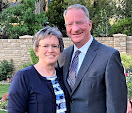
Elder Darrel L. Hammon

Tuesday, October 18, 2011

What a day today was! I was asked to help take the Haitian missionaries to Haiti to begin serving their missions there. They have been in the CCM for about three weeks. They all flew in, but for some reason, they couldn’t get tickets for all of them on the same flight back to Haiti. So, President and Sister Glazier, Elder McDermid and I, and Brother Cuevas and another brother took three vans with 12 missionaries to the Haitian border. On the way there, we took a northern, westerly route so we could pass by Lago Enriquillo, a salt-water lake, which runs close to the Haitian border. We passed through little communities like Glavan, Neyba, Villa Jaraqua, Las Clavellinas, Los Rios, Postrer Rio, Las Descubiertas, Boca de Cachón, y Jimani, the town closest to the border.
                One the way, we passed plantation after plantation after plantation of banana trees. Bananas everywhere. Along side of the road in the little communities and outside of the communities were little stands, selling all sorts of bananas, guineos, and plantains. It was a sight to see. I told Elder McDermid, this is where we ought to buy our bananas. They are plentiful and fresh from the tree.
Las Caritas (the Little Faces)
                Also, along the way we stopped at Parque Nacional: Las Caritas near another park, el Parque Nacional: Parque Enriquillo. We climbed up to this cool overhang that had faces carved into the walls. Looking south, we could see Lago Enriquillo. It was definitely an incredible view. It was
quite steep but well worth the precarious climb and the ever-present heat and mugginess.
                Outside of Boca de Cachón, we were supposed to drive along the lake. Unfortunately, the water level had risen to such a point as to cover the entire road. We had to go around and down a dirt road. Ironically, when we were passing through town, a young man tried to get us to turn down this other street. Brother Cuevas was in the lead van. We just thought he was trying to get us to turn on a different street from the one we were on. We thought he was just pointing to the other street so we could go to his negocio, his place of business. We continued on our merry way.
Lago Enriquillo
Lo and behold, about two miles out, we encounter no road, just a lake. I guess the last time President Glazier came this way, which about three months ago, they just drove through the water, which was about six inches deep. Now, the road lay completely submerged in the water. There was no way we were going to drive through it. So, we turned around and headed back to town to get directions of where we needed to go—ironically down the same road the young man pointed to earlier.
The road not taken--too much lake on the road
                We rolled onto a dusty, old road purposely built, I suspect, so that everyone could go around the lake-covered road. When we were driving down the road, it seemed like something out of an old movie, driving down a dirt road, chasing bad guys although we weren’t chasing any bad guys, just trying to get to the Haitian border to drop off missionaries. It was incredible. Pretty soon, though, we were back on the main road.
                Soon, the border loomed large. Everything looked old and run down and dismal. The buildings and shacks at the border crossing seemed haphazardly built and placed, definitely a sign of no zoning conversations whatsoever. Trucks still lined the roads. Off the road, though, sat dozens and dozens of truck trailers full of supplies and goods. Some of the doors were partially open, and we could see in. There were foodstuffs, just sitting in the trailers, probably waiting for more trucks to haul it across the borders. At least that is what I hope was happening. 
     We pulled up along side of a building. There was the Haitian mission president, President Joseph, waiting for us. The missionaries instantly perked up. There was their mission president, and they were ready to go. President Joseph is a young mission president, not more than 30-years old. What a challenge he has on his hands; yet, when I talked to him, he seemed up to the challenge.
                We stopped. President Joseph took the missionaries to check in with the border crossing people. We waited in the cars. While we were waiting, we decided to eat our lunch. Brother McDermid had been nibbling on his the whole time. Soon, a young man came to the window, begging for food. Elder McDermid gave him some chips and a banana. Before too long, here came another young man. I looked over to Brother McDermid and said, “We don’t have enough food to share with all of these young men. In fact, we would never have enough food to share.”
                Soon, the missionaries were back. They pulled their bags from the three vans and placed them in another big van. Initially, we were going to go across the border, drop off the missionaries, and then turn right around. But here was a van from nowhere to take the missionaries across.
At the Haitian border
The farewell was both sad and happy. All of the missionaries hugged President and Sister Glazier, thankful for having known them. We took pictures, said our goodbyes, and off they went. Before we could all get back in our vans, they had already crossed into their country.
Sister Glazier told me that one of the missionaries said, “We are going to change our country.” I believe them. If anyone will change Haiti, it will have to happen from within. And these young men and two young women are capable, along with the other 50+ elders and sisters already serving in Haiti. I applaud them and raise my hands to them: “Shall we not go on in so great a cause? Courage, Brethren [Sisters] and on, on to the victory!”
                I truly believe they are capable. They will change hundreds of lives while they serve their brothers and sisters. And there will be others who follow in their glorious footsteps. It may take many, many years, but slowly, person by person, family by family, they will change the people and their ways and bring them unto Christ. And thus it shall be.
               

Wednesday, October 12, 2011

“Tradition vs. Hair Clippers—Clippers Win!”

“Tradition vs. Hair Clippers—Clippers Win!”
Elder Darrel L. Hammon

My 45-year-plus tradition of having the same hair cut has dissipated like due in Arizona in June. Gone. And it happened so suddenly.

My lovely bride of 32 years decided that she could cut my hair while we served a mission in the Caribbean. We trundled off to Cuesta, an ACE Hardware store next door to Nacional, one of the grocery stores here in the Santo Domingo, to buy a set of professional hair clippers. After reviewing an amazingly large number of clippers, Joanne settled on a black Remington, Model HC-921, 20+ piece clipper set that purported “A Superior Cute Every Time.” Well, with that slogan, Joanne was set.

While we looked at them, one of the salespersons, perhaps even one of the many managers, kept his distance, yet watchful and wanting to please. His name was Felix, a thin, smartly dressed man, in his late thirties with a thin mustache and thin glasses. We had some other things, including a Colman cooler. I pointed to all of the stuff we were buying—high-end items, mind you—and asked if there might be a discount. He gave me that “ah-let-me-take-a-look-at-the-books” look and off he went behind the counter, topped with lots of stuff.

Before too long, Felix came back, his smallish lips curled into a tell-tale smile. He gave me the thumbs up and motioned us toward one of the cash registers. The young cajera rang it up. Before she totaled it, she looked at Felix who deftly swiped his customer discount card, deducting a whopping 10% from my bill. I nodded approval and said con mucho gusto “Gracias, Felix.” Felix was pleased and left to help other customers.

Now armed with a new cutting machine, Joanne was ready. Soon after, Joanne used delicate care and cut my hair with both the clippers and the scissors and did a wonderful job. Well, the other day, it was time for another haircut. Because she only had a bit of time, she partially cut my hair, leaving my right side just a bit longer than my left. Now, most everyone else couldn’t really tell there was a difference, but incredibly I could tell and amazingly Joanne could, too, especially if she tilted her head slightly left and then slightly right and compared the two sides, rather carefully and discreetly.

After working with the Bishops’ Storehouse people last evening, I came upstairs, and Joanne was ready to finish the job and balance me out. She carefully took out her Remington Model HC-921 and begin cutting, gingerly at first. Soon, though, she was busily gliding the same comb guide as before though my hair. Before too long she was done and let me know.

Ever picky me, I thought my side burns needed just a touch up, a little more thinning, a quick flick of the clippers gliding gracefully over my white comb. Somehow the comb stayed put in its place. I heard a “oops” and panicked somewhat. When Joanne says “oops,” usually that means something drastic has happened. Drastic was an understatement! What was a balanced cut before now possessed a profound nick on the right side of my head, just left of my side burn and a bit above the right ear. We decided right then we had better even this out. She pulled out another one of those “guide combs.”

“Are you sure you know how short this one cuts?” I quizzed her.

“No problem! I think I do.” With that she began her gliding through my hair. When I felt tiny globs of hair on my neck and then another glob or two fall surreptitiously onto the black plastic cape, I knew this was not going well.

She reluctantly gave me a mirror to view myself. The sides were pretty short, actually really short, and the top looked like a mini-Mohawk. My little flip that I have loved so much was blurting “help me” in all directions. It looked out of place and disengaged from the rest of my head.

 “Run the clippers through it and even everything out,” I whimpered, knowing full well my life was about to change forever.

Joanne turned them on and glided that Remington Model HC-921 right through my traditional flip that had been with me since 1st grade. At that very moment, I felt the buzz of the clippers close to my head and words from the “product features” section floated through my mind: “…helping you maintain of hair styles.”

At that moment, I didn’t want a “range of hair styles.” I wanted my 45-year range—that is singular—style only. But the thoughts were all for naught. Joanne shut off the clippers and said, “That is the shortest haircut you have ever had.”

I reluctantly raised my hand, hesitating for just a moment, just a mere moment, before the revelation came, and I allowed the palm of my hand to witness the new reality. What I felt caused me almost to fall off the toilet seat, Joanne’s hair cutting chair. It was gone. All of it. Gone! I stood up and looked into the mirror. Someone else looked back at me. I didn’t recognize the man with no hair. “Pelado” was all that ran through my head, now bare. Pelado. Peeled.

Joanne was devastated; I was devastated. My years of care, the careful part on the right side, the little flip that distinguished my do from the rest, my trademark—all gone, dissipated. For the rest of the short evening—it was now about 10:30 p.m.—I kept touching my hands to my head, hoping it would all magically appear. But, no, it didn’t. I showered, rubbing my pelado head in the water, feeling stubble. Plain hair stubble.

During the night, I awoke, hoping it was all a dream. When morning came, I walked to the mirror, looked once, and said to Joanne, “No hay sueño solo realidad.” There is no dream only reality. We both laughed. It was done. The new look was there. There was/is/will be nothing we can do about it. Instead of the difference between a good hair cut and a bad hair cut being two weeks, I suspect this one may take a month to six weeks, perhaps even two months. For some reason, my hair doesn’t grow as fast as it used to.

And thus it is and will be for some time.

Sunday, October 2, 2011

Back to the Colonial Zone


Back to the Colonial Zone
Elder Darrel L. Hammon

Today, Joanne and I decided to rise early and go back to la Zona Colonial. The Colonial Zone is so intriguing because it contains so much history. We will go back again and again until we have seen all of it. Going for a couple of hours early in the morning is a good thing because it is so hot and humid outside. That's about all we can do. 

We had blueberry pancakes to fortify us and off we went. This time we parked on Calle de las Damas, one of the famous streets in the Zona. We parked and walked a little ways until we entered El Museo Fortaleza de Santo Domingo also conocido como La Fortaleza Ozama. We walked around on the inside and took lots of pictures. It had a cannon pad where several old cannons had been placed. Also, it had windy stairs Joanne and I walked up to see what was on top.
Inside one of the rooms

The following comes from this website: http://www.escapeartist.com/efam2/dominican_republic_walking_tour.html 

“The Fortazela Ozama (Ozama Fortress), open Tuesday-Sunday 8 a.m.-7 p.m., admission about RD$6). These dual forts and the somber tower sit on a bluff overlooking the conjunction of the Ozama River and the Caribbean Sea and were built by Governor Nicolás de Ovando in 1503, making this the oldest military building complex in the Americas. It was on these grounds, in the warden's lodge, that Diego Columbus lived when he first arrived in Santo Domingo with his wife, and it was here that Trujillo housed some of his many political prisoners. The tower is a wonderful place from which to watch a Caribbean sunset at about six o'clock in the evening. The grounds, too, are restful and impart an eerie sense of antiquity. On the grounds stands a statue of Gonzalo Fernandez de Oviedo, famous military historian of the New World. When you buy tickets to the fortress, several young men will approach you as guides. They generally provide congenial and competent service and seem to take great pride in both their own work and the historical context of their city.

Calle de las Damas
“Calle de las Damas—In front of the fortress complex runs the beautiful Calle de las Damas. Built in 1502, it's the oldest street in the hemisphere. This street runs north and south for perhaps half a mile and is one of the most pleasant and historic walks in the Colonial District. This street became the "walk of the ladies" because Diego Columbus' wife, Maria de Toledo (a niece of King Ferdinand), established the habit of walking down this street to Mass accompanied by the noble wives.”

One of the doors leading to the interior
It was a pleasantly wonderful day. We truly enjoy La Zona Colonial. We will return and update you as time rolls on. 

Tuesday, September 27, 2011

Bayahibe and Saona Island: A Good Day to be at the Beach

"Bayahibe and Saona Island: A Good Day to be at the Beach"

Glorious day at the beach. We had an incredible day today. We woke up very early and met the Snows, Swapps, and McDermids at the Casa at 6:00 a.m. We decided to meet to determine whether we were going to go. Well, we decided to take our chances. We loaded up: Snows/Hammons; Swapps/McDermids and headed out. It was a gorgeous drive to Bayahibe where we caught a boat with Scuba Fun just down the road. We gathered our things. Amazingly, there are prescription face masks for snorkeling. Joanne, Brother McDermid, and I got one, and they made all of the difference, which I will talk about later.
Bayahibe Bay
We walked down the road, waded up to our knees out to the boat, and climbed onboard. Soon, we were off, after we waited for five scuba divers that came onboard. We motored out to a spot where the Atlantic Ocean meets the Caribbean. From the distance, we could see the giant waves as these two oceans met. Fortunately, we didn’t go out all of the way. Our boat driver said it was not necessarily safe to do so in the type of boat we had. We stopped instead at some Mangroves and drove through them. We did see a bunch of smaller turtles, barracuda, and four stingrays. After ooing and awing, we were off to the confluence of the Caribbean and the Atlantic. We climbed out of the boat and did a bit of snorkeling. Well, I didn’t have it down yet, but I did have some fun.
Saona Island
Then, we drove over to a little island called Saono Island, a small island just off the coast. The boat let us off there and then left to take the scuba dive folks off to scuba dive. We clamored up the beach and gathered our chairs beneath some very tall palm trees. It was stunningly beautiful. As we sat there, we could see a decrepit dock whose main floor had vanished years ago. Now, huge cement pilings stuck out of the ocean, now perfect resting spots for birds, mostly sea gulls. 
Off Saona Island
The white sands stretched along the beach, and blue water lapped against the sand beach. As we sat there, I said: “We are in the greatest mission on earth.” Then, I asked Elder Swapp, “What time is it?” And we both said, while laughing uproariously, “Who cares!” As I sat there and contemplated our surroundings, the thought came to mind: “It is incredible that we are on a mission in paradise.”
Not long after we arrived, I decided to swim out to the old pier and check out the fish. I slowly made my way out with my snorkel donned. Soon, I was seeing fish I had never seen before. Perhaps, it helped that I finally caught on to snorkeling and I could actually see through the googles. There were tiger fish; beautiful blue and yellow fish; larger silver fish; odd looking fish that looked like a rock with a round, long tail; and many other fish. Many of them just hovered beneath the old pier, darting periodically out and about. Some of the Tiger Fish came close to me, but they sensed me and headed back down. I just watched, enjoying every minute of seeing things I had never seen before.

Slowly, I lifted my headed and motioned to the others to come out. Elder Swapp said if I saw anything to give a wave. Wave I did. They came out, and we swam around the pilings. What a beautiful view we had looking beneath the water and beneath the pilings. That’s where the fish were. Soon, it was time for lunch; so, I snorkeled back, dried off a bit, and headed for the grub.
Palm trees on Sanoa Island
Well, the island grub was pretty good. We had pasta, potatoes, pineapple, and grilled pork chops and chicken. It was absolutely delicious! I even had seconds. After a tasty lunch, we just sat beneath the palm trees and watch our beautiful wives frolic in the ocean. What could have been a more peaceful setting? We decided this was one of the things we could do again. Soon, we were ready to shove off to our next destination: the ocean’s natural swimming pool.
Yellow boat off Saona Island
They weren’t kidding! When we arrived, it really was a “swimming pool in the middle of the ocean.” It was about chest high for several acres. While we were there, we snorkeled again and saw lots of starfish. Joanne picked one up and held it. She said it was quite heavy, so much different than the dried old things we see in stores or on display. We had a great time there, but the time overcame us and away we went.
Our next stop was a deeper part of the ocean although it was a bit blue. The divers donned their tanks and jumped overboard. Our guide told us to stay close to the boat because there were so many other boats coming and going. We did. What an incredible view we saw. It’s another world down under. As I lay there all stretched out, head in the water, breathing through the snorkel, I saw things I had never seen before. It looked to me like a garden. The plants were large and flowing with the water. Some of them reminded me of giant ears, flapping in the water. Both large and small fish played tag with one another, darting in and out of the foliage. There were some things that looked like little volcanoes or Mexican-looking stoves in the bottom.   
Sister Hammon looking as gorgeous as ever!
While we were looking at the gorgeous floor, I noticed something like a plastic bag floating in the water, just to my left and moving toward me. With a bit of trepidation, I recognized it as a jelly fish. Remembering our stings at Palenque, I quickly got out of its way. For a moment, though, I saw the delicate beauty of this fish.
I think I have finally caught on to snorkeling. I stayed submerged for a long time, both here in the natural swimming pool and at the island. It is way too much fun. 
Elder Hammon snorkeling
We had just an amazing day.