Thursday, August 1, 2013

MACILE: A Program of Hope Through Education in the Dominican Republic

 MACILE: A Program of Hope Through Education

Algunos de los Estudiantes--Some of the students

What is more fun than spending time with incredible young people and sharing with them leadership principles and values? Not much!

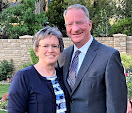
Nemir, Lineirys, Ani, y Darrel

We had the great opportunity to return to the Dominican Republic and work with a group of students who are in the MACILE Program, a program that focuses on the STEM subjects: science, technology, engineering and mathematics. MACILE is the acronym for these subjects in Spanish.

Now, how did we get involved?

Dra. Vargas y Dr. Zometa
 
Just before we finished our mission at the end of January, we met Dra. Claudina Vargas in the fruit and vegetable aisle at La Sierna in Santo Domingo. She approached us because she had seen our missionary plaques. She asked us if we knew anything about the AsociaciónDominicana de Rehablitación (ADR). Thankfully, we had worked with Señor Arturo Pérez, the Executive Director, and Dr. Carlos Zometa, the “do everything” person at the ADR, on a wheel chair humanitarian project. The ADR, Señor Pérez, and Dr. Zometa are incredible people and strive to help everyone they can. 

The summer academy classroom

We then began discussing education and the reason why Dra. Vargas was in the DR. She is actually a Dominicana, born and raised in Itabo, a small community tucked away between la Zona Franca and the oil refineries between Haina and San Cristóbal. She was fortunate and left Itabo, went to Spain to study, then found her way to California State University at Long Beach for Master’s in Economics and then to  the University of Iowa where she earned her Ph.D. in Industrial Engineering. She has taught, researched, and spent time as a Visiting Professor at Brigham YoungUniversity (BYU).

Tres estudiantes

The program also includes language and focuses on improving learning in the STEM disciplines in less-advantaged communities in the Dominican Republic. Since then she has been working with six different schools in the Itabo–San Gregorio de Nigua (Ytabo) region, where she come from.

This is a laguna where Claudina used to swim as a child

In 2007, Dr. Vargas selected the region of Ytabo to start the MACILE Program, a program based on the STEM subjects: science, technology, engineering and mathematics. The program also includes language and focuses on improving learning in the STEM disciplines in less-advantaged communities in the Dominican Republic. Since then she has been working with six different schools in the Itabo–San Gregorio de Nigua (Ytabo) region, where she come from.

Two teachers (dos maestras): Antonia y Celestina with la Dra. Vargas

She asked me to be on the Board of Directors of COSOLA (Complex Systems Optimization Laboratory), the organization that founded MACILE in the Dominican Republic. Of course, I said yes to this volunteer position. Additionally, she invited Joanne and me to the DR to help with the summer program.

Los estudiantes

So, during nine days, beginning July 20 and ending July 29, we spent time with a small group of incredibly bright young people with promise whose desire is to change their lives and their circumstances. During the week, we discussed leadership principles and values. The culminating activity was developing an action plan. I was extremely impressed with students’ mission, vision, and objectives. They understand where they want to go, and MACILE will help them achieve these goals with support, mentoring, and scholarships.

Students preparing the "course" to program their robots


Robot runs the course

Additionally, Dra. Vargas taught math, science, chemistry, and robotics! Yes, robotics! Students had to program the robots to run a course.
 
Elder y Hermana Haws with Dra. Vargas

Elder and Sister Haws came to visit on one of the days to see the robots in action. Elder Haws is an engineer and loves this kind of stuff.

Darrel with the teachers. Claudio, one of the students, is technical support

On one of the evenings, Dra. Vargas, Joanne, and I met with four teachers—Antonia, Celestina, Kirssi, and Alejandro—who have been helping with the program. We explained to them what MACILE was doing and what we were teaching the students during the week. I found these four to be engaged, committed, and willing to help these young people achieve their goals. Their enthusiasm was contagious! We talked until 10:00 p.m. about MACILE and the leadership principles and values.
 
Some of the parents. The sister in white is the aunt (tia) of Ani

The next evening we met with all of the parents of the students who were enrolled in the summer program. Again, we introduced MACILE and its mission, and I shared with them leadership principles and values we were teaching and how mothers and fathers were the most important leaders and teachers in their homes. The parents were enthused. They were proud of their children.

Some of the students at the ADR

Also, during the week, we visited the ADR and then the Centro de Empleo (The Employment Center, now the Center for Self-Reliance) of the Church. The Center is available to all for job-related services, including résumé writing, career assessments, and workshops on self-reliance, entrepreneurship, and English—all without cost to the participants.

LDS Employment Center (Centro de Auto-Suficiencia)

As we were walking through the ADR and the Employment Center, I could see their eyes of understanding open to the possibilities and the potential. When we asked them what they had learned, one of the students said, “I didn’t realize all of the help that was available, and it surprises me that people will volunteer to help me succeed.” They all nodded. They got it! They understood!

One of the schools we work with: Escuela de Itabo

But we also know the harsh realities of where they live. Drugs, prostitution, abuse, lack of educational opportunities, and other challenges run rampant. They have obstacles to overcome. But when I visited with them, they understand these challenges and know they must superarlos (overcome the challenges). They know with MACILE’s help, they will be able to do it.

Leidy's mother, Leidy, and her brother Immanuel

On Saturday, we met Leidy’s mother, the top student in the program, at one of the restaurants in the famous Zona Colonial (Colonial Zone). This young woman is more than incredible. Her mother is a single mother whose husband abandoned the family. Her oldest son just received a full-ride, four-year scholarship to Michigan State. He was a MACILE student. As we met and visited with her mother, you could tell she was proud of them. She has struggled to make sure they did well in school—the power of parenthood and, especially, motherhood. 

Guests at Leidy's event

The week with these young Dominicanos was spectacular! While we started early and retired late and spent the days in the heat and humidity of a Dominican summer, we felt filled and renewed. Yes, as we drove through Itabo, Nigua, and all of the little struggling communities, the challenges almost engulfed us. The challenges bombard these young people on all sides—literally. Our small role almost seems insignificant, but not to the young people of MACILE.


Nemir, Linerys, Anny, and Darrel
 
I think we may be going back to continue our work there. 


Sunday, July 14, 2013

Gardens, flowers, and bouquets--All part of summer and her beauty


Gardens, flowers, and bouquets--All part of summer and her beauty
Darrel L. Hammon

There is something about summers that excites me, and that is growing gardens and flowers. Earlier, this spring, I tilled the garden the old-fashioned way: I used a shovel to turn over the dirt; then, I raked it flat. I am thankful for leather gloves. Now, I didn’t turn the garden over all in one day. I did it over a couple of days. While I turned over the dirt, birds fluttered in and waited, knowing worms would be crawling out of the ground.
 
My little garden helper. I think they call this "pattern mixing."
Once the ground was prepared, my granddaughter and I planted potatoes, peas, and onion sets. She loved sprinkling the pea seed around. I knew she placed the seeds closer than they should have been, but she was being so meticulous.

As we cut the potato seed, I hearkened back to my days during spud cutting days in Uncle Milt’s cellar. He taught us to cut them so there was “an eye” in each set, “an eye to grow,” he would say. I showed Emiline how this was to be done. She just squatted and watched me cut the potatoes and dig the furrow, and then she helped me plant each set, eyes facing up so they would shoot through the dirt and out into the sun.

The start of our early garden
Soon, we planted other things: carrots, beets, Swish chard, corn, tomatoes, cucumbers, and watermelon. Also, volunteer summer and zucchini squash sneaked out of the ground. Some of them we pulled up; others we left to grow. Our neighbors gave us some strawberry starts that we also planted. 

Beets and beans
Before too long, the seeds began to sprout. Each day, Emiline and I walked outside to assess our work. She squealed when I showed her what was coming out of the ground. She would run to her mother and tell her the good news. She was so excited about the garden and its growth. I suspect I was the same way with our garden when I was growing up. 

Starting to grow and flourish
Within a relatively short time, the peas began to bloom and set little pods. I showed them to Emiline. She was curious as to when we could pick them. “Soon,” I said. Well, soon came upon us, and we picked peas and shelled them in a colander almost like the one we used to use when I was growing up. We also carefully dug up some little red potatoes so Joanne could make her famous “new peas and potatoes” dish. We dined well that night.

Pea pod boats
Picking peas is an arduous task, but there is some fun in it. When I was a kid, my dad showed us how to make pea pod boats and sail them down the rows when we watered. I remember making dozens of the pea pod boats each summer. As I was picking this year, I said to myself, “I should make a pea pod boat.” I did and sent it down one of the rows. Ah, the wonderful memories of youth!

Peas ready to be shelled
Our garden has done well. We have eaten onions, beets, carrots, summer and zucchini squash (both “volunteer” plants), one tomato, one cucumber—so far—and Swish chard. I don’t think there is anything as good as fresh vegetables from one’s garden. We ate the cucumber last night, and it was absolutely delicious. And the corn is tassling, meaning corn is on its way!

A triad of daisies
Plus, the flowers have been beautiful. We have planted just a few. Most of the flowers were already here. Thanks to the Poppleton family who used to live here. Apparently, Mr. Poppleton was an expert gardener and loved flowers, particularly lilies and roses. They have been beautiful. You can tell he spent a great deal of time in his yard and his garden.

One of the bouquets
Flowers spice up your yard and can spice up your table if you know how to arrange them. Even if you don’t, you can throw some in a vase, and the next thing you know you have a bouquet of beautiful flowers that a florist would covet. Promise!

The garden today.
Yes, summer can be a joyous occasion in your garden. The vibrant colors of flowers create a glorious view from your windows and the road. Neighbors and people who walk along the sidewalk will definitely say something to you. Plus, having fresh vegetables only punctuate your hard work. In the early morning or in the evening, you can stand back and bask in their beauty, knowing full well who has provided such wonders to the world.

Gorgeous light purple roses

Sunday, June 30, 2013

Hammons Take Up Bicycling or We're Really Tired of Walking All the Time

Hammons Take Up Bicycling or We're Really Tired of Walking All the Time
Darrel L. Hammon

Darrel and Joanne in their cool helmets
  Well, we did it! We bought bicycles. Both are Schwinns: Joanne’s is sky blue, and mine is dark navy blue. Both have 21 speeds although we doubt we will ever use all of them. My first and only bike was a red Schwinn my dad bought me when I was eight-years-old, and I remember the ton of fun I had, driving all over Menan, down to Spring Creek to fish, then down to the Snake River, and down all of the back roads. 

Joanne and her beautiful sky blue Schwinn
These two Schwinns are classified as “hybrids,” which basically means they are a cross between a road bike and a mountain bike. We guess that means we can ride them in the mountains and on the road—perfect for Pleasant Grove, since we live on a hill and have to ride downhill to get to the bike path. So, I guess we are using the “hybrids” the way they were meant to be.
We don’t ride them every day. Joanne has us on two exercise regimes: a bike routine on Mondays, Wednesdays, and Fridays; and a walking routine Tuesdays, Thursdays, and Saturdays. Sundays continue to be our day of rest in so many ways.

Darrel with his Schwinn
So, on Monday mornings, we don our helmets, cool sun glasses, and head for the bike path. That means we speed downhill to the bike path. Compared to walking, I am amazed how fast we can go downhill. Of course, we know—and sometimes cringe at the thought—that we will have to come back up. But no matter which way we start out, we still have to climb back up a hill. For some reason, the zooming down the hill temporarily erases the thoughts of climbing back up.

A barn along the way
We have gone both ways on the bike path, one way goes toward Provo and the other way goes toward Lehi and Highland. I think the bike path is about 17 miles long. It used to be a canal that weaved its way through the small communities along the mountainside. A couple of years back, they laid tube so the canal could still be used, paved it, developed a bike path on top, and named it the Murdock Canal Trail. It is a wonderful addition to the community. Many communities are moving this direction, which I applaud. All communities, if they truly want their community members to be fit and create an atmosphere of progress, should put in a greenbelt that accommodates runners, walkers, and bikers. 

Some of the scenery along the way
Our longest ride has been about nine miles. Of course, we are just beginners. The bike path is pretty easy. The people are extremely friendly. Whether people are walking, jogging, or biking, they always say hello. Many people bike to work; families walk or jog; others walk their dogs; and then bikers race up and down the path. We don’t race; rather, we are more like bike saunterers.

Grain elevators down by the little pond
One day, we rode to a little man-made lake and took a breather. People were fishing on one end of it. A family in our Church ward told us they had gone there for a picnic and to fish. Their children loved it.

The Pond
Now, the challenging thing about a bike ride in Pleasant Grove is that you have to ride up a hill to get back home. It doesn’t matter which way you return home. There is always a hill, and the hill varies in the steepness. But, alas, they are still steep hills.

One of the hills and a pretty long shadow
The first couple of times, we didn’t ride all the way up the hill. It was too steep and difficult. The last couple of times, I have ridden all the way without stopping. Of course, I was in first gear. By the time I arrived home, I was tired, my legs were tight and aching, and breathing came hard. I guess the hill climb pushes the heart to pumping speeds to get the most out of an exercise. 

Am I still alive?
Overall, we are having fun riding our bikes. We enjoy the camaraderie, zooming down the hill, and then the arduous task of pedaling back up hill. We are still getting used to the helmets though, but Emiline, our granddaughter, thinks we look “cool” in them.

Tuesday, June 18, 2013

Mutual Dell Beckons former senior missionaries who had served in the Dominican Republic

Mutual Dell Beckons former senior missionaries who had served in the Dominican Republic

A drive up American Fork Canyon into the Uinta National Forest creates an instantaneous “awe” as one cannot help but gasp at the majesty of the craggy canyon walls, the American Fork River gurgling its way out of the canyon, and the acres and acres of forested hillsides.

Los Crismon, Kilgore, Glazier, Jensen--good food and even better company
 Around 4:30 p.m., we began our wanderings up the canyon with Elder and Sister Crismon who had taken our place as Welfare Specialists in the Caribbean Area Welfare Office. Just eight weeks into their missions, Hermana Crismon fell and broke her hip, which required a quick exit from the DR via a private plane to Florida where she had her hip replaced and within a week she was back home recuperating.

President Glazier and Elder Kilgore with Sister Glazier looking on
 We passed by the guard gate and headed up the canyon, driving slowly and enjoying the incredible views. Soon, we turned into the Mutual Dell, a sprawling congolorament of well-cared for lodges, campsites, and open fields for recreation. Our campsite was a group of picnic tables beneath a solid wooden canopy structure just across the river. 

Elder Atkinson introducing the campfire activity amid the smoke
We pulled our car into a parking spot when we spotted Elder and Sister Atkinson chatting with another couple. The other couple turned out to be los Roberts who had arrived before we did to stake the claim to our site and ready it for the rest of us. Los Roberts won the prize for coming the farthest—Idaho Falls, Idaho.
 
Los Atkinson and Sister Hammon--"Food looks good!"
 Soon, the former missionaries began to arrive—los Atkinson, Brown, Berkeley, Bowcut, Crismon, Eickbush, Ford, Glazier, Hammon, Kilgore, and Roberts. Along with the missionaries the food began appearing on one of the tables—cakes, cookies, salads, fruit salads piled deep with watermelon and cantaloupe, chips, and salsa.
 
Elder Atkinson and los Ford
 Elder Atkinson clicked on the new gas grill that had replaced the charcoal one. Apparently, Mutual Dell has done away with the old-fashioned charcoal grills in each campsite with these new, electric start mega-grills. Had everyone brought a piece of meat, it would have all fit on. Thankfully, Elder Eickbush, ever the Boy Scout, brought a host of BBQ utensils.

Elder Jay E. and Lona Jensen
 The highlight of the evening was listening to Elder Jay E. Jensen, an Emeritus member of the Quorum of Seventy and former member of the Presidency of the Seventy. He and his lovely wife Lona joined us for a night of questions/answers/commentary.

Elder Jay E. Jensen addressing the group
 Since he had spent a good portion of his professional life working in the Church Educational System, teaching seminary, writing curriculum, and training prospective seminary teachers, he brought a wealth of information about learning and teaching. He spoke about the new teaching and learning curriculum for the youth and urged us all to go to www.lds.org, seek out, and watch the 23 teaching videos found under “Come, Follow Me Learning Resources for Youth.” 

Los Jensen and Elder Eickbush having a deep conversation
 He also introduced the concept of “divine rendezvous,” something we have all experienced. He told a story of a Chinese woman who was told to look up a missionary when she went to Toronto, Canada. Now, Toronto is a big place. She saw two young missionaries at an apartment next to the one where she was staying. She stopped them and asked if they were missionaries. They said yes. She then asked them if they knew Elder So and So. One of the elders pulled back his jacket to reveal his name—the same name of the missionary the woman was told to search out when she went to Toronto.

los Brown y los Eickbush enjoying the campfire and the discussion
 He has known the Brethren for a long time. He told a few President Packer stories. One important saying many of us say is this: “We need to get the water to the end of the row. President Packer doesn’t necessarily like this particular saying. Instead of just getting the water to the end of the row, we need to make it rain so that the entire field is covered. Thus, he believes it needs to rain revelation to help us all.
 
Aren't these two of the cutest hermanas you have ever seen? Ford and Hammon

Overall we enjoyed (disfrutamos) a wonderful evening of BBQ, excellent food, even choicer conversations with our fellow missionaries, Dominican Republic updates and reminiscings, picture taking, saludos y abrazos, a glowing campfire, questions and answers from Elder Jensen, and knowing we were basking in the midst of one of God’s greatest creations.

los Berkeley, Roberts, Eickbush, Bowcut--more good food and company

Gracias a todos por haber venido y participado!
 
los Brown

Los Ford

Sunday, June 16, 2013

Essentials of Fatherhood: What My Father Taught Me


I published this recently at http://familyshare.com/essentials-of-fatherhood-what-my-father-taught-me, and I wanted to reprint it here to shout out a Happy Father's Day to all fathers and those aspiring fathers. You are amazing people who deserve huge accolades. But I also know that fathers can do even more.

Essentials of fatherhood: What my father taught me 
Darrel L. Hammon

My father: the Dean Hammon and eight children

Becoming and being a father can be both a scary and wonderful thing. Unfortunately, there is no undergraduate or graduate program in fatherhood. Fatherhood is a learned art — often on the job after the children come. Some of us have had exceptional fathers. Others do not care to talk about theirs. Still others say their fathers taught them a few things, not necessarily through what they said but by their actions.

My father was one of those whose grounding emerged from being the youngest of 12 siblings. When my father was 11-years-old, his father passed away. Thankfully, he had plenty of grown-up brothers and sisters to help him toe the line although the line sometimes blurred. He entered the military at an early age and learned hard things on ships and being stationed in Japan.

My father was not the type for sit-down conversations and flowery dissertations. Rather, he taught us through a variety of methods, probably gleaned from several sources, including his older brothers and my mother. But taught he did.

Here are five fatherhood essentials my father taught me through his example:

Fatherhood is being a leader through example. My father spent time in the Army as a drill sergeant and often we felt we were part of his platoon. He liked to see things accomplished and done correctly. Consequently, he often showed us once how something was supposed to be done and expected us to learn quickly and carry on after he was gone. Granted, he did check up on us periodically to make sure we had completed the task. Often, he had to re-show us how it was to be done, but he did not hover over us.

Fatherhood is helping others and teaching your children to do the same. Some time ago, my wife and I were reminiscing about our fathers. Both of our fathers have passed away. What impressed us both about each of our fathers was the fact that they would help anyone with anything.

Joanne's father would be the first one out on a snowy day and shovel all the walks and driveways down the street. Although he had to drive almost 40 miles to work each morning, he always took time to get up early and do what the neighbors needed done.

My dad and my sisters
My father taught me the same thing. I remember getting up early and going with him to shovel the walks of the widows and older people in our neighborhood or working in their yards and pulling weeds. On his days off, my father would go and help others with their roofs and fences. He did not ever expect to be paid, and he taught us that helping others was just part of the service we performed as good neighbors.

Fatherhood means spending time with your children. What a revelation this is! Whatever event that happened in my life, my father tried to attend even though he worked shift work most of his life. I suspect there were times when he did not have much sleep before he left to go to work. The former drill sergeant who I thought was the tough guy was really a marshmallow underneath. He teared easily when he talked about the achievements of his family. I remember when I received my doctorate from the University of Idaho, my mother and father journeyed almost 600 miles so they could be with me and share in my success.

Fatherhood means teaching children how to work. One of the challenges I have heard numerous leaders lament is the lack of work ethic in recent college graduates and young people. My father would probably cringe if he heard that. He believed in a strong work ethic — true hard work.

One thing I learned early was never complain because my dad would always find more work for us to do. He specifically built a home in the country so we could have animals — cows, chickens, horses, pigs and sometimes lambs. Plus, we had a big garden, which became one of my responsibilities in the summer. From these many projects and chores, I learned to rise early, work hard and be responsible. I still rise early, even though I do not have outside chores to do. I still have a garden and I love rising early and working in it.

Fatherhood is being happy. My father loved to tell jokes, and his laugh was contagious. I remember going to one of the Call Me Trinity movies with him and some of my friends, and I thought my friends and I were going to die laughing not at the funny scenes in the movie, but at my dad laughing at the funny scenes.

One of things my dad loved to do was yodel. He said he learned to yodel while tending sheep in the high mountain meadows. One of the treasures we have as a family is a short recording of Dad yodeling. My siblings and I have compiled “Deanisms,” and our children now often pan when we use one, “Sounds like he is turning into Grandpa Hammon.” So be it!

Fathers are natural leaders and examples. Mine was no different. Often, though, his teachings never came from a direct conversation. Rather, they came through working with him and watching him help others as if it were just part of his normal, everyday life. I can only hope I can continue teaching my children and grandchildren by being a good example.

My father with my two daughters in 2004 in Quartzsite, Arizona.